



June 29, 2026
Glass Wine Cellar Cost vs Traditional Wine Cellar: Which Is More Expensive?
Choosing between a glass wine cellar and a traditional wine cellar is a major decision for homeowners who want to combine functionality with design. Both options serve the same core purpose—proper wine storage—but their construction methods, materials, and visual impact differ significantly. These differences directly influence the overall cost, making it important to understand where your money actually goes before investing.
What Is a Traditional Wine Cellar?
Standard construction approach
A traditional wine cellar is usually built in a basement or enclosed space using materials such as wood, stone, drywall, or brick. Because it often utilizes existing structural space, it can be more cost-efficient to develop.
Core components and expenses
The main expenses in a traditional wine cellar typically include insulation, climate control systems, wine racks, and moisture protection. These elements are essential for maintaining proper temperature and humidity, which are critical for wine preservation.
Cost expectations
On average, traditional wine cellars are considered the more budget-friendly option. Costs can still vary widely depending on finishes and size, but they generally remain lower than glass wine cellars due to simpler construction requirements.
What Is a Glass Wine Cellar?
Modern luxury design
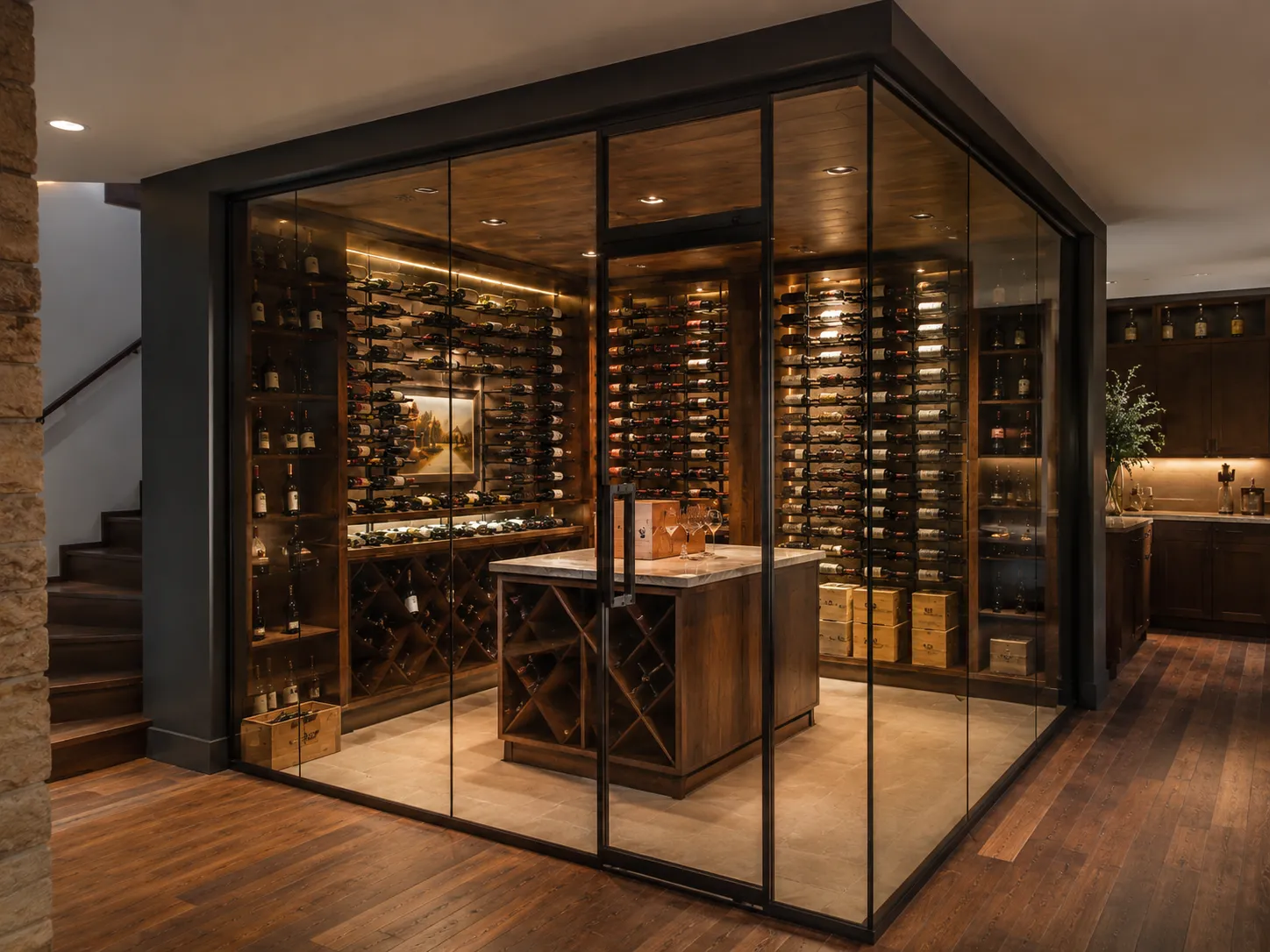
A glass wine cellar is a high-end architectural feature designed to showcase wine collections rather than hide them. It is often installed in visible areas such as dining rooms, living rooms, or luxury kitchens.
Materials and engineering requirements
The key cost driver is specialized glass. Builders use tempered, insulated, and UV-protected glass panels to ensure proper wine storage conditions. These systems must also be airtight, requiring precise engineering and professional installation.
Additional premium features
Glass wine cellars often include custom metal framing, integrated LED lighting, and advanced cooling systems. These features increase both material and labor costs, making the overall project significantly more expensive.
Glass Wine Cellar Cost vs Traditional Wine Cellar Cost
Price comparison overview
In most residential projects, a glass wine cellar costs significantly more than a traditional one. Depending on size and customization, it can be anywhere from 30% to 100% more expensive.
Why glass costs more
The higher price comes from three main factors: specialized materials, complex installation, and design customization. Unlike traditional cellars, glass cellars must maintain perfect visibility while also ensuring strict climate control, which requires advanced engineering.
Traditional cellar cost advantages
Traditional wine cellars benefit from simpler construction and lower material costs. They are also easier to retrofit into existing spaces, which reduces labor expenses.
Long-Term Value and Maintenance
Energy efficiency considerations
Traditional wine cellars often perform better in terms of insulation efficiency, especially when built underground. This can lead to lower long-term energy costs.
Maintenance requirements
Glass wine cellars may require more careful maintenance, particularly with sealing systems, glass cleaning, and climate control equipment. However, modern materials have improved durability significantly.
Impact on property value
Glass wine cellars tend to increase a home’s luxury appeal. They can act as a visual centerpiece that enhances resale value in high-end real estate markets, while traditional cellars are valued more for practicality.
Which Option Should You Choose?
When to choose a traditional wine cellar
If your priority is storage efficiency, cost control, and long-term practicality, a traditional wine cellar is usually the better option.
When a glass wine cellar makes sense
If design, luxury presentation, and visual impact are important, a glass wine cellar can justify its higher price tag.
Glass wine cellars are generally more expensive than traditional wine cellars due to premium materials, engineering complexity, and design features. However, they also offer unmatched aesthetic appeal and a strong luxury impression. Traditional wine cellars remain the more economical and efficient solution. The right choice ultimately depends on whether you prioritize cost savings or architectural statement.